The other day I was cruising through Amazon television and I spot this movie American Gigolo with Richard Gere that came out back in 1980. I remember this film because I was about 13 years old when it came out and living in Florida at the time. Everyone was talking about this movie and what a big deal it was at the time, but I was just a kid, so what did I know. I remembered though that the song Call Me, by the singer Blondie, came out and it was featured in the film.
I decided to watch the movie for free on Amazon and I didn’t make it very far into the film because it was really boring, but the opening scene featuring a 1980 Mercedes Benz 450 SL being driven by Richard Gere was really cool. I’m including it in a Youtube video that I found in the post below and you can check it out for yourself and see what I mean. You can even rent the movie on Youtube now, which you certainly couldn’t do in 1980. If an ad pops up in the video be sure and close the ad.
This cool car back in 1980 was the bomb. Today a new 2018 Mercedes Benz 450SL nicely equipped sells for over $100,000. They start at an MSRP of around $88,200.
The 350SL and 450SL though from 1972 to 1980 had a unique look and body style with a 4.5l V8 engine under that hood that by 1980 with all the emissions regulations produced 160hp. It was under powered for such a big motor and heavy car compared to one today. It had such a cool iconic look that it was featured in this 1980 movie with Richard Gere being the American Gigolo. I wonder if he owns one of these vehicles today?
What’s pretty amazing though is the NADA retail value on these 1980 vehicles today. Mercedes Benz only produced about 6,000 of them a year, so it’s not like there are hundreds of thousands of these vehicles still around today. The original MSRP was $35,839, which back in 1980 was a lot of money for a car. Today, the retail on a 1980 Mercedes Benz 450SL ranges from $14,200 low retail to $42,200 high retail according to NADA.com. Haggerty is not quite as aggressive and definitely more conservative, going as high as $32,100 and as low as $5,700 (good luck finding one that cheap that still runs or doesn’t need $10,000 in work).
DRIVE A CLASSIC ICONIC CAR AND DON’T WORRY ABOUT DEPRECIATION LIKE YOU HAVE IN A NEW ONE
As The Cool Car Guy, I find cars like this for people who are into cars all the time. What’s really cool about this vehicle is that you can have me find you a 1980 Mercedes-Benz 450SL, depending on your budget, in a variety of conditions. If you only have $10,000 to $20,000 to invest in a cool classic car consider having me track down one of these for you. It might take some time to find the right car, but it’s worth it when you can get a vehicle that you know isn’t going to be losing money the minute you drive it off the lot.
I have written other articles talking about the benefits of going after vehicles that everyone else isn’t trying to buy. They are harder to find sometimes. How cool is it that a 1980 Mercedes Benz 450SL that sold new for around $35,000 is still worth more than a 2011 Toyota RAV4 that millions of people are trying to buy?
Which is one of the many reasons why I like really cool cars!
Auto Consultant – John Boyd: The Cool Car Guy John is an auto consultant who owns CoolCarGuy.com, a licensed car dealership in Lone Tree, CO. He can help you save time and money on any make or model, new or used, lease or purchase – nationwide! Call or email John about your next vehicle! jboyd@coolcarguy.comor Twitter @coolcarguy
It’s almost impossible to turn on the television or radio these days and not hear about Tesla and their electric vehicles or what I like to refer to as “the disposable car”. I have had so many debates with people about Tesla and my take on the electric car market that I figured I should write an article about why I feel the way that I do about the electric car market. Of course, people who like Tesla and electric vehicles are like people who were in love with Apple years ago. They had so much emotional passion that they refused to have any common sense that you could do the same thing with a Windows based machine that you could do with an Apple. It’s a similar “cult” following when it comes to Tesla.
WHY ARE ELECTRIC VEHICLES “DISPOSABLE”
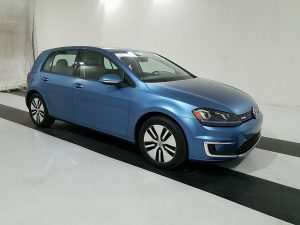
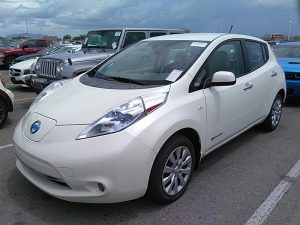
First of all, it’s not just Tesla that makes electric cars. They are just the media darling and what people are most familiar with when it comes to electric vehicles. Here’s a picture of a 2015 VW E-Golf that is going for sale at auction that I pulled off the dealer auction website. The majority of people probably have no idea this car even exists or that it’s a fraction of the cost of a Tesla. It has a range of about 83 miles, so you can’t get very far on a battery charge with the VW, but other major brands have electric cars, including BMW, Nissan, Mitsubishi, Mercedes-Benz, Chevrolet, Toyota, FIAT and others.
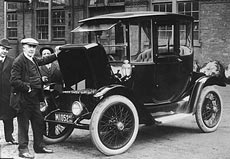
There are plenty of options when it comes to getting an electric car, but the reason why I call them “disposable” is the same reason that Henry Ford created the Model T and won the automotive industry back in 1908. That’s 110 years ago by the way and you can go to just about any car show or parade in the United States and see a Model T that is still running down the road. It’s been “recycled” and is not disposable because it runs on gasoline and not electricity. Contrast that with the photo of this electric car pictured with Thomas Edison that you can read about at the PBS website, Timeline: History of the Electric Car.
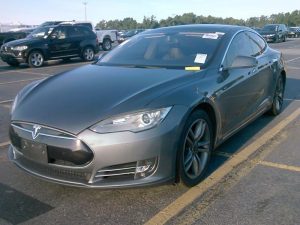
Electric cars are super cool when they are new and shiny and the batteries are working great, but what happens when they get older and the batteries are not charging any longer? I know that people love to get lost in the ether of their imagination on what car companies will do for them down the road, but let me bring some reality to the situation. Car manufacturers are in the business of selling and leasing new cars. They are not in the business of creating batteries for your ten year old electric vehicle as much as you want them to be it’s not going to happen. If you go to the support page of Tesla click here and see how much a replacement set of batteries are for any of their vehicles. At the time of this post, there wasn’t a link saying, “Battery Replacement” on their site. If you do a search online you will get all kinds of information from $12,000 to $28,000 to $40,000 to replace the batteries down the road.
Which is why if you’re going to get an EV you should lease it for sure because you don’t want to be the proud owner of one of these where the batteries are depleting continually. It’s also why I call them a “disposable car”. Let’s just look at the Tesla Roadster for example that came out in 2008, so ten years ago now. It’s hard to believe it was that long ago, so Tesla has done extremely well lasting for a decade now as an electric car company. However, eventually the batteries wear out and just like an iPhone or iPad you have to either update the batteries or sell the car for parts. It’s inevitable. It’s not like a 1908 Model T that you can get parts for and put gas in and head down the road.
WHY ARE PEOPLE FAILING TO REALIZE THE EV BUSINESS MODEL IS THE SAME AS APPLE
The Electric Vehicle business model came right out of Silicon Valley. You know, the guys who tell you that your first iPhone doesn’t work anymore or your iPhone 5c for that matter no longer accepts the latest software update, so you need an iPhone X.
That business model is the exact same as the EV business model. What’s your 10 year old computer worth? How about your 10 year old iPhone? The answer is not much or nothing at all. They are disposable products. In the meantime, you could buy a 1958 Porsche 550A Spyder for a cool $4.5 to $5 million at Gooding and Company or the Mecum or Barrett Jackson auction since they only built 39 of them and it will actually run with a tank of gas and some spark plugs. That’s not going to happen with a Tesla or any other electric vehicle ever. They are destined for the scrap heap because they are disposable cars, just like your disposable mobile phone and computer.
Which is why I’m not a fan of electric vehicles, like so many others in this industry seem to be. I like the fact that you can buy like a sweet 1958 Chevy Impala for example and drive it down the road on a tank of gas without hoping that some company from 60 years ago is still around to offer a battery upgrade to make the car actually work.
I like vehicles that you can recycle and that are not expensive disposable products. The sucker who buys that 2008 Tesla Roadster for the last time before the batteries die is like the same guy at the bottom of a pyramid scheme. Eventually, he’s going to lose all of his money and have a nice lawn ornament or they will put it at the entrance to a junk yard as a novelty item from years gone by. _________________________________________________________________________
Auto Consultant – John Boyd: The Cool Car Guy John is an auto consultant who owns CoolCarGuy.com, a licensed car dealership in Lone Tree, CO. He can help you save time and money on any make or model, new or used, lease or purchase – nationwide! Call or email John about your next vehicle! jboyd@coolcarguy.comor Twitter @coolcarguy
I really enjoy driving European and other luxury brand vehicles, such as Audi, BMW, Mercedes Benz and other high-end cars. Who doesn’t? They often have great technology, handle extremely well on the road and have fantastic performance. However, everyone knows that there is a cost involved in driving these vehicles and so once they are out of warranty they tend to depreciate like a rock.
THE TOYOTA RAV4 VS THE BMW X5
The other day I had a client call me about consigning his 2011 Toyota RAV4 LE, so a base model vehicle with a sunroof, and it had out 60,000 miles on it. I looked up what the trade value would be on his vehicle if we didn’t consign it and I just sent it to the dealer auction. It was $10,000 based on what they have been selling for at auction.
As the conversation progressed, he said that he was thinking that he might want to also get out of his 2010 BMW X5 with the 4.8l motor that was pretty hard loaded. It had more miles than the Toyota RAV4 with around 94,000 miles on the odometer. I looked that one up for him as well and to his shock and amazement it was selling at auction for the same price as the 2011 Toyota RAV4, which was about $10,000 for a trade-in value.
That’s pretty unreal considering the 350hp 2010 BMW X5 4.8l had an MSRP of $56,300 before adding in all the options for the vehicle. It’s more like $60,000 to $65,000 by the time you start adding options on a vehicle like that one. And that’s compared to a 179hp 4 cylinder 2011 Toyota RAV4 LE with an MSRP of about $25,575. So, you have a high-performance german luxury brand that is over twice the amount of money new selling 7 to 8 years later for the same amount of money at auction and at retail as a basic Japanese SUV. Which means that if you’re into European vehicles be prepared to lose money or you can buy them at a substantial discount.
WHY DO MORE EXPENSIVE CARS LOSE THEIR VALUE SO MUCH
It seems pretty amazing that a more expensive vehicle would depreciate more than a less expensive vehicle, but part of the problem is the cost of parts and overall repair costs. Many times people who own a less expensive vehicle will work on vehicles themselves rather than taking it to the dealership for repairs. These people don’t count the time that they are spending fixing brakes or doing oil changes or other repairs into their overall cost of ownership. Most people who own more expensive vehicles don’t tend to work on their own vehicles, so they take it to the dealer at $150 to $200 an hour. They don’t always think about the fact that they could be going to a less expensive repair shop, with a lower hourly rate, for some of their more basic repairs.
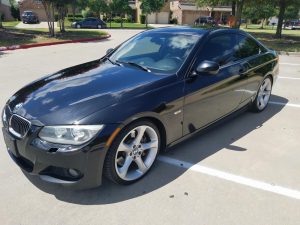
For example, I had to replace a radiator overflow in a 2011 BMW 3 Series and the local BMW dealer wanted $500 to do it. I found the part on Amazon for $80 and had a local repair shop install it for me for a half hour of bill time for $50 and a $500 repair turned into a $130 repair. You can’t find after-market parts for most high-line vehicles for the first few years of production, so you have to wait a few years before you can find other options for parts than the dealership. The parts can be very expensive, which is one of the reasons why these vehicles do not hold their value the way the Toyota or Honda vehicles do. It’s a supply and demand issue because people want to have lower repair costs.
Basically, you can thank the dealers and the mechanics for depreciating your Euro luxury vehicles. If you know what you’re doing you can get a great deal on a luxury performance vehicle a few years old. Which is the case for The Cool Car Guy because I like driving vehicles that sold for $65,000 new for $10,000 to $20,000.
Of course, I shouldn’t be telling people this because the more people who figure this out the more expensive these vehicles are going to be and they won’t depreciate as much based on supply and demand. The reality though is as long as the majority of people keep wanting to drive a 7 or 8 year old Japanese vehicle for 50% off, I’ll keep telling my clients that they can be driving the equivalent year high-performance vehicle for 70% to 85% off and laugh all the way to the bank. _________________________________________________________________________
Auto Consultant – John Boyd: The Cool Car Guy John is an auto consultant who owns CoolCarGuy.com that is a licensed car dealership in Lone Tree, CO. He can help you save time and money on any make or model, new or used, lease or purchase – nationwide! Call or email John about your next vehicle! jboyd@coolcarguy.comor Twitter @coolcarguy
Last year someone asked this question on a website and I decided to answer it for them since so many people are anti-leasing today. I think this is because most people do not take the time to understand how interest rates work on purchasing a vehicle.
Since I own a used car dealership, I primarily finance mostly used vehicles for people. Most of my clients pay cash or they borrow against the equity in their cash value life insurance policies and pay back the insurance company using an unstructured loan. This is by far the best way to purchase a vehicle because there isn’t any credit involved and you may payments on your own terms. I explain this in detail at CoolCarsForLife.com if you’re interested in reading about that strategy.
You can check out my business model by visiting CoolCarGuy.com and what it is that I do. I figured I would write an article about this topic though since so many people buy vehicles instead of lease vehicles.
13 YEARS LATER
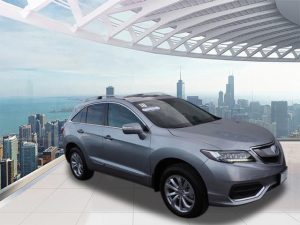
Recently, I had a client track me down who purchased a used Acura MDX from me 13 years ago. I was 37 years old when she purchased her last vehicle from me and she must have appreciated the experience to track me down again. She was also impressed with the longevity of her Acura MDX that now had close to 180,000 miles on the odometer. She was ready for a new one. This is a woman who keeps her vehicles for a long time and she decided that she wanted a new one.
If she had purchased a new one the interest rate was pretty good, but it wasn’t amazing. However, by leasing the vehicle her money factor was .00050, which is the equivalent of about a 1.2% effective interest rate. She also didn’t want a huge payment on a vehicle that had an MSRP of $51,595 and leasing allowed her to only make payments on the depreciation of the vehicle. By leasing it using what is commonly called a “closed-end lease” today, she was able to lock in the residual value and purchase the vehicle in the future for around $29,000.
THE RESIDUAL VALUE
Most leasing companies design their leases in such a way that if you go over the miles you purchase they are going to hit you with $.10, $.15, $.20 or $.25 a mile should you turn the vehicle back into the leasing company. There are actually some leasing companies and manufacturers that will hammer you for the miles, even if you don’t turn the vehicle back in, which is crazy. I’ve seen Mercedes-Benz do this and it’s a total “jerk”‘ move because you’re buying the vehicle and they don’t have any assumed risk or additional depreciation that it is costing them.
If it’s an “open-end commercial lease”, like on a truck for a construction company, then it makes sense to charge for the depreciation without a guaranteed residual value because they are structuring the lease that way upfront based on future unknowns. The company might beat the crap out of the truck and it will be worth thousands less at the end of the lease, so the residual may not be locked in or it might be extremely low. You want to make sure you read the lease agreement or know what you’re getting into when you lease a vehicle for sure and most people don’t. When they get burned at the end they are ticked off because they thought that their Mercedes-Benz lease worked like their previous Toyota lease.
LEASING STANDARDS
Typically though, most leasing companies are going to structure their residual so that if you stay within the miles and you give the vehicle back they can sell it at auction and not lose money. They are going to give you the option of buying the vehicle out without nailing you for miles on top of the residual value, which is the right thing to do since you are sharing in the risk on the vehicle with them. Some leasing companies, usually manufacturer’s like BMW for example, will put a really high residual on their car and that can give you a low payment, but they are banking on people going over their mileage, giving the car back and collecting money on tires, wear and tear and the mileage hit before sending it to auction or letting a franchise dealership buy it back.
The benefit though is that if you get the right lease and you lock-in the residual value then the miles are not really that important on the right vehicle. An Acura MDX for example that you can buy for around $29,000 in three years with 12,000 miles a year is going to more than likely retail for more than that amount with 36,000 miles. Which means that if you put on 45,000 miles you can still buy it out at the end of the lease and drive it another six to ten years and you should still be in great shape. You have a lower payment for the first three years and a manageable payment if you choose to finance the remainder for the another three or five years.
I’ve leased Subaru’s, Honda’s and Toyota’s to people here in Colorado where they will look at the residual after three years and they realize they are in an “equity position” at the end of the lease term. Often times they will call me and just ask me to help them buy their vehicle at the end of the lease. The Toyota Tacoma or 4Runner is a great example of this kind of a strategy and many of the Subaru’s like the Crosstrek. You get to the end of the lease and you realize that if you give it back to the leasing company Toyota or Subaru are going to sell it at auction for a few thousand less than what they are selling for online. Why wouldn’t you just buy it out and sell it yourself or keep it? These are what I refer to as an “equity lease” because you have equity in the vehicle at the end of the lease term.
GETTING THE VEHICLE YOU REALLY WANT
Instead of running around looking for the obscure off-lease, hard to find, overpriced used vehicle you could be driving a new vehicle and financing it over a longer term knowing that you’re going to keep it for 12 or 13 years like my client decided to do. The first few years she is paying very little of the lease payment in interest and most of her payment is going toward depreciation.
Some of you may be thinking this is a really bad idea because you are financing the vehicle over a longer term. The reality is the amount of interest she will pay is less for the first three years and she is going to keep the vehicle longer than someone who is buying a vehicle that already has three, four or even five years of driving on it. This is the mistake and the reality that the financial wizards giving people bad advice don’t seem to understand.
If you buy a vehicle with 45,000 miles on it and you drive it for five years at 20,000 miles a year your vehicle now has 145,000 miles on it and it’s pretty much worthless. If you finance or lease a new vehicle and you drive it for eight or ten years and it has 160,000 miles on it at 20,000 miles a year, it’s worth about the same as the genius who has 145,000 miles on their used vehicle. The difference is your vehicle had a full warranty and no wear and tear on it to start. In fact, you will probably get 9 or 10 years out of it as the original owner and are much more likely to maintain the vehicle to last. The depreciation on a vehicle once it hits 145,000 miles compared to 180,000 miles is negligible.
The fact is that most people have to get out of their vehicles sooner than planned because they are paying too much in monthly payments to maintain them. When a costly repair comes they have to unload them because they can’t afford the repair costs on their used car that they are still making payments on. _________________________________________________________________________
Auto Consultant – John Boyd: The Cool Car Guy John is an auto consultant who owns CoolCarGuy.com that is a licensed car dealership in Lone Tree, CO. He can help you save time and money on any make or model, new or used, lease or purchase – nationwide! Call or email John about your next vehicle! jboyd@coolcarguy.comor Twitter @coolcarguy
Someone recently asked me why so many used vehicles are purchased by dealers at auction. I figured I would write a post explaining why auctions are used by dealerships to buy and sell cars.
WHY DEALER AUCTIONS
The first reason that dealers will end up being at a Dealer Auction is because they cannot choose what vehicles they take in on trade. This happens daily. Someone wants to buy a Ford F150 that I might have on consignment and they have a Toyota Corolla to trade. I may not want the Toyota Corolla in my dealership inventory taking up space and having to recondition it, advertise it, etc. So, I send it up to the auction for another dealer to bid on it and put it in their inventory. I just want to sell the Ford F150 that I have available, so I’m willing to roll the dice on the Toyota Corolla and send it up to the auction.
This is one of the reasons why most used car managers don’t really care about the trade value in the NADA or KBB book, but what the vehicle you’re trading is probably going to bring at auction. Most people go in thinking that the dealership is trying to rip them off on their trade, but the reality is the used car manager doesn’t want to get stuck with a vehicle they don’t really want. After you drive off, the used car manager has to decide whether to try to sell your nicely used vehicle with all of it’s issues or send it to auction.
THE BURN RATE OR THE TURN
Believe it or not, the car that you trade is not going up in value every month. On the contrary, each month a third-party in the form of NADA and Kelly Blue Book are coming out with a book or website telling the world that your vehicle is worth less than it was the month before. A dealer needs to unload vehicles that have been on their lot for 60 or 90 days to avoid loosing too much money in depreciation. Most dealerships also have a floor plan with a curtailment, so they have to turn those vehicles or write a check to the floor plan company for part of the cost of the vehicle or the full amount. Think about if you have fifty vehicles in inventory and the average curtailment is $1,500 and the dealer has to write a check for $75,000 to keep all of those vehicles on their floor plan. That’s a big incentive to send it to the auction and unload the vehicle.
Dealers also have certain vehicles that sell better in their inventory. If you owned a Lexus dealership and someone trades a Chevy Cruze the odds are pretty good you don’t want it in your inventory. You send it up to the auction to free up capital that allows you to buy another Lexus or Toyota or some other used car that sells well on your lot.
The auction ends up being an efficient way to unload unwanted inventory or to pickup new inventory for the dealership. It’s dealers purchasing vehicles from other dealers, so the emotion is out of the equation compared to buying from a consumer. The consumer has an emotional tie to a vehicle where the used car manager doesn’t care – it’s just moving metal.
I use the dealer auctions quite often to find inventory for my clients for this very reason. _________________________________________________________________________
Auto Consultant – John Boyd: The Cool Car Guy John is an auto consultant who owns CoolCarGuy.com that is a licensed car dealership in Lone Tree, CO. He can help you save time and money on any make or model, new or used, lease or purchase – nationwide! Call or email John about your next vehicle! jboyd@coolcarguy.comor Twitter @coolcarguy

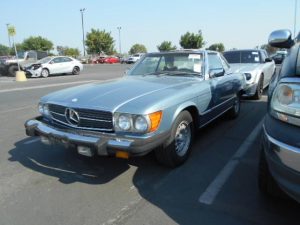 The other day I was cruising through Amazon television and I spot this movie American Gigolo with Richard Gere that came out back in 1980. I remember this film because I was about 13 years old when it came out and living in Florida at the time. Everyone was talking about this movie and what a big deal it was at the time, but I was just a kid, so what did I know. I remembered though that the song Call Me, by the singer Blondie, came out and it was featured in the film.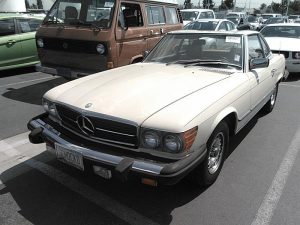
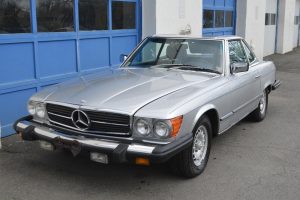 As The Cool Car Guy, I find cars like this for people who are into cars all the time. What’s really cool about this vehicle is that you can have me find you a 1980 Mercedes-Benz 450SL, depending on your budget, in a variety of conditions. If you only have $10,000 to $20,000 to invest in a cool classic car consider having me track down one of these for you. It might take some time to find the right car, but it’s worth it when you can get a vehicle that you know isn’t going to be losing money the minute you drive it off the lot.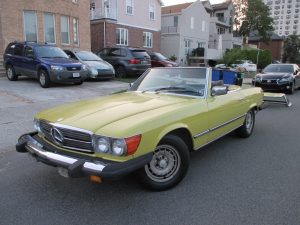
 Auto Consultant – John Boyd: The Cool Car Guy
 Which is why if you’re going to get an EV you should lease it for sure because you don’t want to be the proud owner of one of these where the batteries are depleting continually. It’s also why I call them a “disposable car”. Let’s just look at the Tesla Roadster for example that came out in 2008, so ten years ago now. It’s hard to believe it was that long ago, so Tesla has done extremely well lasting for a decade now as an electric car company. However, eventually the batteries wear out and just like an iPhone or iPad you have to either update the batteries or sell the car for parts. It’s inevitable. It’s not like a 1908 Model T that you can get parts for and put gas in and head down the road.
 The Electric Vehicle business model came right out of Silicon Valley. You know, the guys who tell you that your first iPhone doesn’t work anymore or your iPhone 5c for that matter no longer accepts the latest software update, so you need an iPhone X.
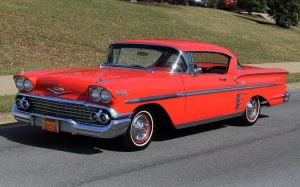 Which is why I’m not a fan of electric vehicles, like so many others in this industry seem to be. I like the fact that you can buy like a sweet 1958 Chevy Impala for example and drive it down the road on a tank of gas without hoping that some company from 60 years ago is still around to offer a battery upgrade to make the car actually work.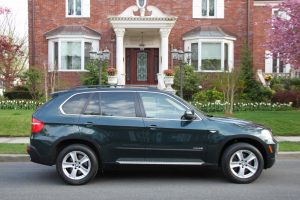
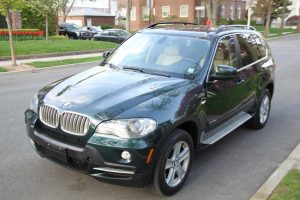
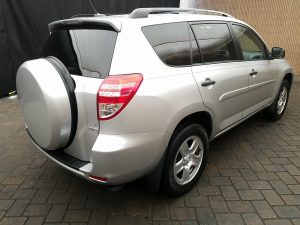
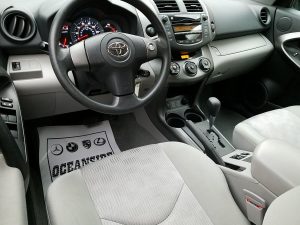 That’s pretty unreal considering the 350hp 2010 BMW X5 4.8l had an MSRP of $56,300 before adding in all the options for the vehicle. It’s more like $60,000 to $65,000 by the time you start adding options on a vehicle like that one. And that’s compared to a 179hp 4 cylinder 2011 Toyota RAV4 LE with an MSRP of about $25,575. So, you have a high-performance german luxury brand that is over twice the amount of money new selling 7 to 8 years later for the same amount of money at auction and at retail as a basic Japanese SUV. Which means that if you’re into European vehicles be prepared to lose money or you can buy them at a substantial discount.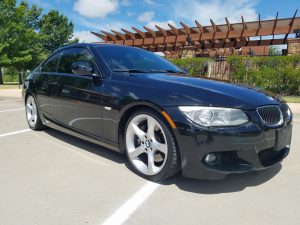
 Hey Cool Car Fans,
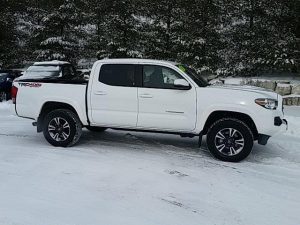 I’ve leased Subaru’s, Honda’s and Toyota’s to people here in Colorado where they will look at the residual after three years and they realize they are in an “equity position” at the end of the lease term. Often times they will call me and just ask me to help them buy their vehicle at the end of the lease. The Toyota Tacoma or 4Runner is a great example of this kind of a strategy and many of the Subaru’s like the Crosstrek. You get to the end of the lease and you realize that if you give it back to the leasing company Toyota or Subaru are going to sell it at auction for a few thousand less than what they are selling for online. Why wouldn’t you just buy it out and sell it yourself or keep it? These are what I refer to as an “equity lease” because you have equity in the vehicle at the end of the lease term.
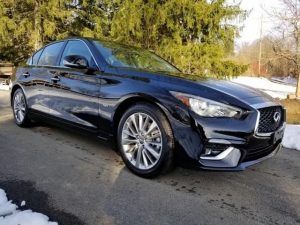 Instead of running around looking for the obscure off-lease, hard to find, overpriced used vehicle you could be driving a new vehicle and financing it over a longer term knowing that you’re going to keep it for 12 or 13 years like my client decided to do. The first few years she is paying very little of the lease payment in interest and most of her payment is going toward depreciation.
 Hey Cool Car Fans,