Category Archives: Cool Cars

The Tale of Two Car Worlds: How I Drive Performance Machines for Less Than People Pay for Boring Transportation

It’s not Europe vs. Japan. It’s Drivers vs. Commuters. Enthusiasts vs. Consumers. People who buy machines… vs. people who buy appliances.

A Denver dealer Market Report hit my inbox last week — the same report dealerships use to decide what to stock, what to dump, and how fast a car needs to get off the lot before it starts costing them money.

Every month it tells the same story:

👉 There are two types of car buyers.
👉 And they live in two completely different universes.

Once you understand these worlds, you can drive cars most people think they can’t afford…
for less than what they’re paying for a used crossover.

Let me show you exactly how.


🚦 WORLD #1 — THE APPLIANCE UNIVERSE

These buyers want:

predictable

reliable

low-stress

“just get me there” cars

Their heroes are:

Toyota RAV4

Honda CR-V

Subaru Outback

Kia Sportage

Hyundai Tucson

These aren’t drivers’ cars.
They’re refrigerators with loan terms.
Reliability is the brand. Emotion is a bug, not a feature.

And because EVERYONE shops this segment?

They pay more. A lot more.

RAV4 used = only a few thousand less than new

CR-V used = basically new price

Outback used = silly money

High demand → low depreciation.
High demand → fewer deals.
High demand → used prices stay inflated.

And this group thinks they’re being “smart.”
But here’s the plot twist…

Most of them overpay for basic transportation.


🏎️ WORLD #2 — THE PERFORMANCE UNIVERSE

This world includes everything built for people who actually enjoy driving:

BMW X1 and 3 Series

Mustang GT

Porsche Macan

Dodge Challenger

C7 Corvette

Audi S4

Subaru WRX

BMW 530i

AMG anything

M anything

Even Tesla Performance models

Not Europe vs America vs Japan.
Not luxury vs economy.

It’s intent:

Cars built to do something, not simply go somewhere.

And here’s the part the appliance crowd never understands:

These cars depreciate harder not because they’re “worse,”
but because people FEAR them.

Fear = opportunity.
Fear = discount.
And on the right vehicle, fear can mean 40–60% off the original price in just a few years.

Which is how I can buy a BMW 530i that was $60k new for about the same price someone else pays for a used CR-V. And I can typically get a 3 Series BMW with AWD for less.


🔧 THE TRUTH: REPAIRS HAPPEN EVERYWHERE

Let’s clear something up:

Repairs don’t ONLY happen to performance cars. Your “reliable” car isn’t immune from maintenance and repairs. A mechanic is still charging you retail rates and inflating the cost of parts to fix it. Everything breaks.

  • Toyota hybrid batteries fail
  • Subaru head gaskets… exist
  • Honda turbo failures are a thing
  • Lexus air suspension isn’t free
  • WRX motors don’t live forever
  • Mustang transmissions go
  • Corvette electronics aren’t angels
  • Even Kia/Hyundai engines got recalled by the truckload

So the whole “I buy basic because repairs” argument is… a myth with good PR.

If everything can break, you might as well drive something you actually enjoy driving. Get the experience and not just the point A to point B.


📉 THE SECRET MOST PEOPLE NEVER LEARN: LEASES SUBSIDIZE YOUR USED BUY

Here’s where the real game gets spicy.

Luxury and performance brands know the public fears repair bills, so they SELL that fear back to them as a lease.

The lease crowd says:
“I want a new car under warranty.”

Manufacturers say:
“Perfect — we’ll build depreciation into a 36-month lease, make you pay for it, and then we’ll take the car back and sell it again.”

People think they’re avoiding risk.

In reality?

They’re pre-paying three years of depreciation so guys like me can buy the car for half its original price.

Every off-lease car on the lot is a gift from someone who paid retail to feel safe.


🐟 FORD GOT DESTROYED WITH JAGUAR — AND CAR GUYS ATE WELL

When Ford bought Jaguar, they pumped out subsidized leases like candy.

Three years later?

Auctions were flooded.
Residuals were fantasyland.
Dealers panicked.
Cars dropped like a rock.

And anyone with cash and a pulse got deals that looked illegal. Ford got to pay for the losses.


🔌 TESLA IS DOING IT RIGHT NOW

Tesla pushed too many leases with inflated future values.

Now?

lease returns hitting all at once

resale values collapsing

dealers and auction houses overloaded

panic-selling

discounts everywhere

Once again…
the people who leased paid for the depreciation.

The people who understand the market get the deals.


🌊 THE MARKET IS A TIDE — AND YOU BUY WHEN IT GOES OUT AND RIDE THE WAVES

Every 24–36 months, the same cycle repeats:

  • BMW lease wave
  • Mercedes lease wave
  • Audi lease wave
  • Porsche lease wave
  • Mustang rental fleet returns
  • Challenger/Charger ex-fleet dumps
  • Corvette volume returns
  • Tesla tsunami of off-lease vehicles

This is not an accident.
It’s not luck.
It’s not magic.

It’s supply and demand.
It’s consumer psychology.
It’s fleet behavior.
It’s lease-return timing.
It’s dealership economics.

And once you learn to read the pulse,
you drive cars people THINK they can’t afford
for prices they CAN’T BELIEVE.


🔍 REAL-WORLD EXAMPLE: BMW X1 vs. Honda CR-V — Same Money, Completely Different Universes

Let’s make this real.

Here were actual Denver-area numbers pulled from listings and dealer data when I originally wrote this article:


2021–2022 BMW X1 (xDrive28i)

Used Price: $24,500–$29,000

Original MSRP: ~$42,000–$47,000

Horsepower: 228 hp

0–60: ~6.3 seconds

Torque: 258 lb-ft

Brakes: Strong bite, euro-tuned

Steering/Chassis: tight, responsive, eager

Driving Feel: unmistakably BMW

What it’s built for: the Autobahn, high-speed stability, driver engagement

Buyer Type: someone who enjoys the act of driving


2021–2022 Honda CR-V (EX or EX-L)

Used Price: $28,000–$32,000

Original MSRP: ~$31,000–$36,000

Horsepower: 190 hp

0–60: ~7.8 seconds

Torque: 179 lb-ft

Brakes: fine for suburban traffic

Steering/Chassis: light, vague, comfort-biased

Driving Feel: intentionally numb

What it’s built for: commuting, errands, the school drop-off line

Buyer Type: someone who wants zero surprises


🤯 Look at that again.

One vehicle was engineered in a country with:

long stretches of Autobahn without a posted speed limit

long-distance high-speed cruising

mandatory performance standards

drivers trained to respect the left lane

The other was engineered for:

Costco runs

fuel economy

durability

mild suburban traffic

Same price.

Two totally different engineering philosophies.


🏁 This is why the X1 vs. CR-V comparison is never apples-to-apples.

A BMW X1, even as an entry-level model, is:

stiffer

sharper

faster

more capable

more confident at speed

more composed in corners

more rewarding to drive

Because it was literally built for the Autobahn, then adapted for the U.S. market.

A Honda CR-V doesn’t have to meet those expectations.

It’s built for a completely different mission:

simple

predictable

durable

“Don’t scare the owner” handling

There is nothing wrong with that — it’s just a different universe.


🎯 The punchline: Same money, different world.

Someone will pay $30,000 for a used CR-V

because “it holds its value.”

Meanwhile, a BMW X1 — engineered for speeds the CR-V cannot even dream about — sits $2–5k cheaper only because someone else prepaid the depreciation through a lease.

Performance buyers win.

Appliance buyers pay retail.

That’s the real difference.


🎯 THE BOTTOM LINE: KNOW WHICH WORLD YOU’RE IN

I prefer to drive these vehicles. This is the performance lane I like to stay in when I own a vehicle.

  • Porsche
  • BMW
  • Mercedes
  • Audi
  • Mustang
  • Corvette
  • WRX

And anything else that makes me grin 😎

…for the same money someone else is spending
on a used appliance with plastic wheel covers.

Not because I’m reckless.

Because I understand the market better than the people who are subsidizing it.

They pay for “peace of mind.”
I pay for the car.
Big difference.

When you know the game dealers play,
you get to drive the cars everyone else is afraid of…
for less than they’re paying for the ones everyone else settles for.

That’s the tale of two car worlds.

And for me…only one of them is worth living in.


WAIT — THERE’S ANOTHER PART TO THIS STORY

I took the idea behind this article and turned it into a Parking Spot on CoolCarGuy.com.

Why?

Because a Parking Spot gives the subject its own full page and its own URL that I can share anywhere I want.

And you could have done exactly the same thing.

You could have compared a BMW to a Honda.

You could have photographed a Porsche you spotted at Starbucks.

You could have written about a Mustang, Corvette, dealership experience, road trip, repair bill, YouTube video or some automotive opinion everybody else is getting wrong.

Then you could turn that idea into your own Parking Spot.

A full-page Parking Spot costs $7 one time.

And here’s the part most people miss:

You can also join the affiliate program for free, share your Parking Spot, introduce people to CoolCarGuy.com and potentially earn commissions when people you refer become customers.

You could have written this.
You could have built the page.
You could have shared the URL.
And you could potentially get paid for helping introduce the next advertiser.

👉 SEE THE PARKING SPOT I BUILT AROUND THIS IDEA
👉 CREATE A $7 PARKING SPOT
👉 JOIN THE AFFILIATE PROGRAM FREE

Build the page. Grab the URL. Start sharing it.

Loading

Why the Car Business Plays Chess While You’re Still Unfolding Your Checkerboard — “Hey, Do You Negotiate?”

“Why yes, we do?”

It’s the classic line people love to throw at a car dealership — “Do you negotiate?” like they’re crossing the border in Mexico, trying to haggle for a blanket and a cowboy hat.

I saw a post the other day on LinkedIn where someone walked out of a dealership because the salesman said, “We don’t negotiate.” He was mad and called the salesman a liar because he said that “it’s expected” that in the automotive industry, every dealer should negotiate.

So, what did he do? He wanted that vehicle really bad, but at a price he thought would work for him based on the “mountains of data” available to him online. He called back, got a different guy… and magically, they did negotiate. Amazing!

As The Cool Car Guy, I would have never guessed this would have happened, but he was clear in his post that this was all because of his superior negotiating skills and not being refused.

💡 Here’s the lesson:
It’s not about if they negotiate.
It’s about how well they do it.

You might think you scored $1,500 off MSRP…
Meanwhile, you got buried in:

  • A jacked-up interest rate
  • A lowball on your trade
  • And a $3,200 “warranty” or “protection package” you didn’t ask for

I’ve sold over $50 million in vehicles, ran my own dealership, and never carried inventory. So, what do I know? I know how the industry works.

I watched it happen every day.

People would come to me AFTER they bragged to me that they “got a deal,” only to find out they were completely buried in backend profit.

They would justify to me how they took sometimes thousands less for their trade than I could have gotten them because they saved on the price of the vehicle. The justification with “fuzzy math” was all too comical.

🚨 So, let’s be honest:

  • Penske is worth $12.27 BILLION
  • CarMax is worth $9.1B
  • AutoNation: $8.5B
  • Sonic Automotive: $2.8B+
  • and Carvana (somehow still worth a whopping $77.91B)
  • plus more I didn’t list…

They love it when you negotiate.
They do it several times a day, 6 days a week.
You do it once every 3–5 years.

They’re professionals.
I hate to tell this guy, but he just played checkers at a chess tournament.

“Sure, come on down and we’ll make a deal today!”


Want to actually control the deal?

List your ride on CoolCarGuy.com,
set it to “Make Offer”,
and negotiate all you want — without the games.


PS — Isn’t it funny how people will sprint to the dealership when they’re desperate to unload their car for $5,000 under value…
…but hesitate to spend $39.95 to list it online and drive real traffic to it?

Same people who brag about “negotiating.” 🤷‍♂️

The Cool Car Guy – John Boyd

🚦 Where to Go Next
Love cars as much as I do? Here’s how you can plug into the new Cool Car Guy ecosystem:

👉 CoolCarGuy.com — List, showcase, or trade cool cars. Enthusiast rides only. No clutter, no commissions.

👉 CarsFreak.com — The wide-open directory for everything automotive. Cars, shops, parts, services, events — if it’s car-related, it belongs.

This blog is the story side. The directories are where the action happens. 🚗💨

Passion vs. Practicality: Why EV Culture Isn’t the Same as Real Car Culture

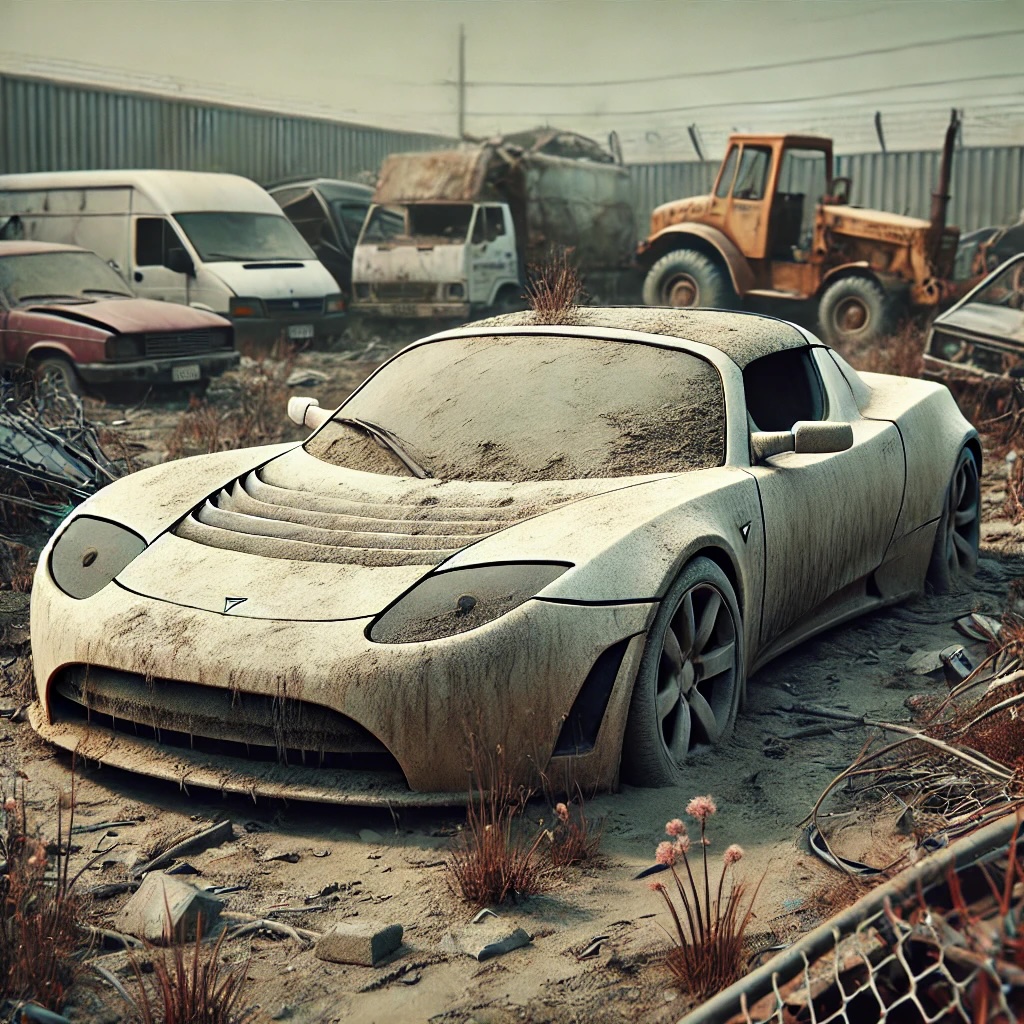
After my recent LinkedIn post about the Tesla Roadster stirred up 60+ comments (and counting), I realized it was time to go deeper—because there’s only so much you can say in 3,000 characters.

That post wasn’t an outright attack on EVs. It was about ownership, longevity, and culture. I focused on the 2008 Tesla Roadster, a vehicle that helped launch the EV movement, nearly two decades after its debut. Some people got the point. Others? Let’s just say their reactions were… intense. Like a Ford guy at a Chevy show.

So here’s the unfiltered response—the real talk.


EV Enthusiasm vs. Gearhead Culture

I’ve been around car people my entire life. I’ve sold EVs, ICE cars, exotics, classics—you name it. I’ve seen Mopar-only loyalty, Subaru cultists, Ford ST fanatics, and Mustang vs. Camaro debates that never end. I love it. It’s passion. But that passion is rooted in something deeper: the ability to engage with a car beyond the driver’s seat.

That’s the difference.

Gearheads rebuild what they love—or they know someone who can for the price of a case of beer. EV owners? Most are drivers of a tech product. They’re passionate, sure. But that doesn’t mean they’re builders, fabricators, or tuners.

One commenter on LinkedIn said, “You can fix EV batteries cell by cell!” Okay… but how many of you are actually doing that? In your driveway? With a multimeter, heat gun, and fire extinguisher on standby?

Another said I was disingenuous for using the Tesla Roadster as an example. But let’s be clear: the Roadster wasn’t a concept car. It was marketed, sold, and delivered as a production vehicle. If we can’t fairly look at its performance and long-term serviceability now—almost 20 years later—then when can we?


Repairability Is Culture

ICE vehicles have something EVs don’t: an open, thriving, global network of mechanics, machine shops, and parts suppliers keeping millions of cars alive every day.

Let me put it in tech terms: ICE vehicles are like Open Source, while EVs are like Apple. One gives you freedom, options, and control. The other locks you into its ecosystem—and then charges you a premium for the privilege.

Want to be locked into your car’s manufacturer for all service, support, and updates? Cool. But don’t pretend that’s freedom. And don’t act like you own the vehicle.

This isn’t nostalgia. It’s about function. Go to a Fourth of July parade and you’ll see vehicles 50, 75, even 100 years old still running. That’s recycling at its best. There are over 250 million vehicles in the U.S., and 33 million are over 50 years old. That’s not a fluke. It’s a system that works.

Meanwhile, the same people who say ICE vehicles are killing the planet are pushing a disposable EV model that requires replacement every 8–10 years due to software, battery life, or proprietary parts.

Unlike ICE cars, there’s no shop around the corner pulling apart Tesla drivetrains or reprogramming proprietary battery management systems.


Planned Obsolescence Isn’t Just a Tesla Problem

This isn’t just about Tesla. Legacy automakers are chasing the same model. Ford doesn’t even support parts for the 2012 Edge anymore—a mainstream vehicle. Manufacturers use plastic where they used to use metal. They discontinue parts after 10 years.

Everyone saw Tesla’s success, and Wall Street loved it. Now everyone wants the same proprietary, profitable, closed-loop system. But that model isn’t good for gearheads or EV fans who want to keep their cars long-term.

It’s just like with smartphones—the plan is clear: force you to upgrade, not repair.


EVs Are Cool—But Let’s Not Pretend They’re the Same

This might sound like I’m anti-EV. I’m not. I’ve driven plenty of them. I took a Lyft home from the airport in a Hyundai Ioniq 5. Smooth, fast, quiet—loved it. I got a Starbucks manager a Nissan Leaf for his commute. Perfect car for the job.

EVs are tools. They’re ideal for short commutes, rideshare drivers, and solar-powered homes. But they’re not rebuildable long-term classics. Most people driving them don’t even think in those terms—and that’s okay. But don’t pretend they’re going to be around in 2080 like a ’61 Corvette or ’67 Camaro.

Modern ICE vehicles may have more moving parts, but they’re infinitely more accessible to service and repair. You’re not going to 3D print a Tesla inverter chip in your garage.

You might keep a classic running with junkyard parts, eBay finds, and a bit of backyard wrenching. You’re not going to do that with a bricked EV.


The Starbucks Barista and the iPhone

Some LinkedIn commenters accused me of cherry-picking examples. One even said EVs are better because of reduced fuel costs over 112,000 miles. He did the math down to the penny.

Cool. But that’s not culture. You’re justifying ownership based on energy spreadsheets and charging habits—not mechanical freedom or longevity.

It’s like the Starbucks barista who thinks they can build an iPhone because they use one every day while scrolling TikTok. That’s not how this works. That’s like thinking you’re a surgeon because you binge medical dramas on Netflix.

You’re not building your EV. You’re using it. That’s fine. Just be honest about it.


The VW Beetle

When I was in high school back in 1984, I owned four VW Bugs—a red one, a white one, a yellow one, and a blue one. I just thought they were cool at the time with the rear engine placement, rear-wheel drive—they were fun in the snow and really fun to do “donuts” in a parking lot during a snowstorm in Wisconsin.

A buddy of mine, who was a total stoner and flunked a grade, could turn a wrench like nobody’s business. We swapped motors, pulled parts, and busted out the legendary 1969 book by John Muir: “How to Keep Your Volkswagen Alive: A Manual of Step-by-Step Procedures for the Compleat Idiot.”

By the time we were done, all four of those Bugs were running. I gave him one, sold the others, and kept the hustle going.

In some ways, that was the beginning of The Cool Car Guy. Of course, I didn’t know it at the time, but I went on to always be flipping cars as a kid and later as an adult. Cars are cool—and it didn’t matter to me that Steve couldn’t pass a math class or was held back in school. The guy knew how to fix a car. And that was worth everything at the time.


Final Thought

EVs are exciting, innovative, and the future in many ways. But don’t pretend they’re the same as the cars we build, break, and rebuild with our own hands.

Passion doesn’t make you a gearhead—being able to restore what you love does.

Real car culture isn’t plug-and-play—it’s build, break, rebuild.

If your car’s future is one software update away from being bricked, that’s not ownership—it’s dependence.

To everyone who came at me in the comments—respect. Passion makes this all fun. But don’t confuse driving a product with being able to rebuild it.

You can love your EV. Just don’t pretend it’s a wrench-turner’s dream.


The Cool Car Guy – John Boyd

🚦 Where to Go Next
Love cars as much as I do? Here’s how you can plug into the new Cool Car Guy ecosystem:

👉 CoolCarGuy.com — List, showcase, or trade cool cars. Enthusiast rides only. No clutter, no commissions.

👉 CarsFreak.com — The wide-open directory for everything automotive. Cars, shops, parts, services, events — if it’s car-related, it belongs.

This blog is the story side. The directories are where the action happens. 🚗💨

The World’s Greatest Cars

Hey Cool Car Fans,

Earlier this month, I ran a marathon in Ventura, CA. My wife Becky and I decided to visit Santa Barbara the day before the marathon and explore this cool little beach town. While there, I spotted a few cool cars rolling down the street and posted some photos on my Instagram account.

After the marathon, we cruised down to Rodeo Drive (pronounced “roh-DAY-oh”) to check out some cool cars. I kind of had my own personal car show, while Becky shopped at Lulu Lemon and a few other stores. I made a YouTube video, which I’ll link below, so you can check it out. It was a fun time, and I always enjoy looking at and checking out cool cars.

The Cool Car Guy’s Rodeo Drive Personal Car Show

250 OF THE MOST MEMORABLE AUTOMOBILES

This video got me thinking, and I decided to do something really cool. Over the years, I’ve owned my share of “coffee table” car books, some of which are now out of print. My son-in-law recently shared an auction catalog from a Porsche enthusiast, which gave me an idea.

The 1969 Corvette L88

The catalog was from a prestigious auction in California in 2015. Among the amazing vehicles for sale was a 1969 Corvette L88 Coupe, which was estimated to sell for $700,000 to $1 million at the time. I’ll try to get a picture of it to add to this post so you can check it out. It was fascinating to see this rare car in the catalog from nine years ago.

In 1969, Chevrolet produced only 116 Corvette L88 Coupes, making the L88 one of the rarest and most sought-after Corvettes from that era. The L88 featured a high-performance 427 cubic inch V8 engine with a nominal horsepower rating of 430, though its actual output was significantly higher. In 2024, these rare models can fetch between $500,000 and $3,000,000 at auction, depending on their condition and history.

Most people are surprised to learn that a 1969 Corvette can sell for such high prices. While the L88 is particularly valuable, a well-maintained 1969 Corvette convertible with matching numbers and some modern upgrades can sell for around $30,000 online or at auction. A standard 1969 Corvette base model with a 300hp 350 V8 engine in good condition typically values between $40,000 and $70,000. More desirable models with higher performance engines, such as the 427ci variants, can command higher prices.

The Cool Car Guy’s YouTube Channel

As I mentioned in my welcome video on The Cool Car Guy YouTube Channel, there are around 31 million enthusiast-type vehicles in the United States. These are vehicles that people own because of their passion for cool cars. That’s a massive number of vehicles.

This got me thinking it would be fun to take some of my “coffee table” car books and find some of these vehicles online for sale. I can create YouTube videos describing these vehicles for my audience and list them on CoolCarGuy.com with a link to where you can purchase them. I’m thinking of capping it at about 250 of the world’s greatest cars. It could take a long time to curate these vehicles, but I’m excited to get started because I think it’s a cool idea and it should be a lot of fun.

I will include a blog post here on The Cool Car Guy’s blog about each vehicle as well. Stay tuned and let’s make some magic happen online! If you have a cool car to sell, consider listing it on CoolCarGuy.com. If you’re a car dealership with a cool car, definitely list it because if someone sees a cool car, they will visit your site. Once they are there, the odds are pretty good they will check out your other inventory, so you could be using one vehicle to promote all your inventory by leveraging one ad on CoolCarGuy.com.

The Cool Car Guy – John Boyd

🚦 Where to Go Next
Love cars as much as I do? Here’s how you can plug into the new Cool Car Guy ecosystem:

👉 CoolCarGuy.com — List, showcase, or trade cool cars. Enthusiast rides only. No clutter, no commissions.

👉 CarsFreak.com — The wide-open directory for everything automotive. Cars, shops, parts, services, events — if it’s car-related, it belongs.

This blog is the story side. The directories are where the action happens. 🚗💨

Electric Vehicle Sales Plummet

Hey Cool Car Fans,

I’ve been writing about the problems with the electric vehicle for years now and I have been criticized by many of the faithful followers of the Tesla and EV’s in general. It appears though that what I’ve said for years is finally starting to be taken seriously by consumers and manufacturers.

Unfortunately, the decision by key leaders in the automotive industry to try to follow and catch Elon Musk and Tesla in the EV market has had serious ramifications in the automotive industry as a whole. Instead of focusing on vehicles that people actually want to purchase, they have been creating vehicles that are not in demand.

For example, I recently tried to get a new Toyota Landcruiser for a client in Steamboat Springs, CO and I was told that it will take three years based on current production, dealership allocation, people on waiting lists, etc. from one dealership. Another dealer told me that would be “nearly impossible, but good luck”. It was the same for the new 2024 Lexus GX Overtrail. In other words, if you want a 2024 Land Cruiser or Lexus GX Overtrail be prepared to take delivery in 2027? That’s quite idiotic and Toyota isn’t alone. You have people who are wanting to buy your product, but you can’t deliver. We used to call this back in the early 1990’s “vaporware”, which are products a company would advertise, but nobody could actually get. Of course, you can get a good deal on an electric vehicle that are sitting on the car lots right now.

I did a quick search this morning on the Manheim dealer auction site for Teslas. There were 3,556 Tesla’s for sale right now at this one dealer auction. To put this in perspective, there was one 2017 BMW M6 in a manual transmission at the same auction. They are both specialty vehicles when you get down to it with a limited market, but there are a ton of used Tesla’s on the market right now.

I started writing a book called, “Electric Vehicles Unplugged: Debunking the Hype”, but I wasn’t sure it would have been worth it to share my opinion on the matter beyond The Cool Car Guy’s Blog here. I figure that the market will figure out the pitfalls of the EV landscape. This is a chapter that I wrote in the book, that I decided to post here for people to consider.

In the quest for a greener and more sustainable future, electric vehicles (EVs) have emerged as a shining beacon of hope. They promise cleaner air, reduced greenhouse gas emissions, and a departure from our reliance on fossil fuels. However, as we delve deeper into the world of EVs, it becomes evident that not everything is as pristine as it seems. This chapter explores some of the inherent problems with electric vehicles and why they may not be the ideal solution for everyone.

1. Limited Range: The Anxiety of Running Out of Juice

One of the most glaring issues with EVs is their limited range. Unlike traditional gasoline-powered vehicles that can travel hundreds of miles on a single tank, EVs often require recharging after just a fraction of that distance. This range anxiety can be a significant concern for those who rely on their vehicles for long commutes or frequent road trips. Until EVs can match the convenience and range of gasoline cars, they may remain a less practical option for most people.

The reality is that temperature fluctuations can affect battery performance. If you have ever left your phone sitting in the Sun and suddenly it shuts down due to getting too hot you know that temperature has an impact on electronics and battery life. Lithium-ion batteries are affected by temperature fluctuations that in turn are going to affect vehicle range. This was recently witnessed in parts of the country this Winter where charging stations were not working and people were stranded with dead batteries. The media didn’t do a very good job of covering this though since driving a car has somehow become political with the involvement of special interest groups making money off of government business incentives for electric infrastructure.

2. Charging Infrastructure: A Long Road Ahead

While EV charging infrastructure is steadily improving, it remains a work in progress. Gasoline stations are ubiquitous, offering quick and convenient refueling. In contrast, charging stations are still relatively sparse, and the charging process itself is time-consuming. Until the charging network becomes as widespread and fast as refueling at a gas station, EVs may be an impractical choice for those with busy lives and tight schedules. If you’re charging at home and driving a short distance to work that’s a different story all together.

I delivered an older Nissan Leaf to a manager at a Starbucks who lives in New Mexico and he drives it back and forth to work daily without having a gas bill. The low price of the vehicle that he paid, the short range and charging at night at home before going to work isn’t an issue for him. This is a great example of how an EV can work for someone depending on the use, but most people are going beyond a short commute. It’s simply his daily driver to work, like someone riding a bus with added mobility. This is a great use for an older EV and something people should consider if they are wanting a second or third vehicle.

3. Upfront Costs: Paying the Electric Premium

Another formidable barrier to EV adoption is the upfront cost. Electric vehicles typically come with a higher sticker price than their gasoline counterparts. This cost difference can be a hard pill to swallow, even when considering potential long-term savings on fuel and maintenance. Until EVs become more affordable and accessible to a broader range of consumers, they will remain a luxury item for many.

However, this is definitely changing since the used car market is what is actually important and EV prices are dropping on the used market. The media again doesn’t understand this fact, but they cater to Wall Street investors and companies in their market assessment. What they fail to realize is that over twice the number of used vehicles are sold in the US every year than new vehicles. I recently texted back and forth with a friend of mine who owns a dealership in Colorado and he said he had just sold a 2017 Model S 90d that he had for 16 months. He had lost over $12,000 selling that vehicle. This is a real world example of “supply and demand” and how if the demand isn’t there and the supply is the prices are going to drop substantially.

4. Environmental Costs of Battery Production

The production of lithium-ion batteries, a key component of EVs, is not without its environmental costs. The mining of materials such as lithium, cobalt, and nickel can have adverse ecological impacts, including habitat destruction and water pollution. Moreover, the carbon footprint of manufacturing these batteries can be significant. The industry continues to talk about recycling and sustainable sourcing being on the horizon, but this is a joke. All you have to do is look at what “recycling” has looked like the environmental concerns surrounding battery production remain a critical issue to address.

5. Energy Source Matters: The Dirty Side of Clean Transportation

The environmental benefits of EVs are closely tied to the source of the electricity used to charge them. In regions where electricity primarily comes from coal or other fossil fuels, the reduction in greenhouse gas emissions from driving an EV may be less substantial. This begs the question: Are we truly reducing our carbon footprint, or are we merely shifting it from the tailpipe to the power plant? The transition to cleaner energy sources is essential for EVs to live up to their green promise.

The media doesn’t really want to cover these facts because driving a vehicle has somehow become political, due to Climate Change. Forget the fact that gas powered vehicles in the United States are equipped with a catalytic convertor to reduce emissions. There are also fuel additives and other technology to reduce emissions that are not pushed as a solution because it doesn’t fit the narrative. Forget that there are 283 million vehicles registered in the United States alone. Is the plan to just scrap all of these vehicles and put them into a landfill?

The majority of greenhouse gases come from producing electricity, flying airplanes in the upper atmosphere, diesel trucks, trains, ships, factories and other sources beyond a consumer driving an automobile. Also, don’t forget that a major polluter can buy “carbon credits” from a company like Tesla to continue polluting, but “magically” be considered to be polluting less. It’s a bit like getting a hall pass in elementary school to go to the bathroom. The carbon credit does nothing. It’s just a hall pass to pollute.

6. Resource Scarcity: The Hidden Costs of Going Green

As the demand for EVs grows, so does the demand for critical resources like lithium and rare earth metals. This heightened competition can lead to supply chain vulnerabilities and price fluctuations. The scarcity of these materials could pose challenges in scaling up EV production and might even result in geopolitical tensions over access to these resources.

There are also computers, phones and other battery powered devices that rely on these resources, so be prepared to pay more for these other products. Ultimately, all of these products that are supposed to be “recycled” end up being scrapped, along with the batteries. Try getting a replacement battery for your old phone? The companies like the car companies are not in the business of making obsolete technology run longer, but they are in the business of selling a new product.

7. Job Displacement: The Price of Progress

The shift from internal combustion engines to EVs could spell job displacement in traditional automotive sectors. Manufacturing, maintenance, and support industries may face workforce reductions, potentially harming local economies and communities. Balancing the promise of environmental benefits with the socio-economic impacts of this transition is a complex challenge.

As I mentioned, we are already witnessing this as supply of new vehicles diminishes and people keep their older cars longer, the price of older vehicles is staying higher than normal. Typically, a vehicle that is leased will depreciate 40% to 50% over a three year period based on having about 45,000 miles on the odometer. We’re seeing older used vehicles that are seven and ten years old that are selling 30% or 50% of what they sold for new! This has the consumer trying to figure out how they can get a car for their new driver, but having to pay way more than planned. It’s causing people to keep their vehicles longer and repair them simply because it’s costing more to buy a used vehicle than they expected.

8. Technological Limitations: The Battery Conundrum

While battery technology has improved, it still faces limitations in terms of energy density, charging speed, and lifespan. Breakthroughs in battery technology are crucial to address these challenges fully. Until we overcome these limitations, EVs may remain an imperfect solution.

Other fuel sources like hydrogen are discounted by many because of a lack of infrastructure, that also exists for the EV market. It’s much easier though to add a hydrogen filling station to existing gasoline, diesel station than it is to build an entirely new EV charging station. The government seems to have no problem to invest billions into creating a new EV infrastructure instead of spending money to update an existing infrastructure for additional consumer options. The charging of a battery is time consuming, so you can’t just retool an existing gas station like you can for hydrogen. A person filling up with hydrogen or gasoline is in and out of the fueling station in a short period of time. They are not sitting at a spot for 30 minutes or more waiting for one vehicle to charge. It’s rather comical that common sense issues like this are not even addressed from a purely practical standpoint.

Conclusion: A Complex Journey Ahead

As we navigate the road to a sustainable future, electric vehicles are a part of the solution, but they are not without their problems. Limited range, charging infrastructure, upfront costs, and environmental concerns are legitimate hurdles that must be addressed. EVs are not a one-size-fits-all solution, and their suitability depends on individual circumstances, priorities, and geographic locations. In the chapters that follow, we will explore potential solutions and innovations that could help overcome these obstacles, making EVs a more viable option for a wider range of consumers.

(If I had decided to finish the book that is – lol).

The Cool Car Guy – John Boyd

John is the owner of CoolCarGuy.com, a boutique premium classified ad website for cool cars! He also has The Cool Car Guy’s blog and The Cool Car Guy’s YouTube channel. Reach out to John anytime – jboyd@coolcarguy.com or Twitter @coolcarguy